 India
- My Motherland
India
- My Motherland HOME | INDIA | CRICKET | DOWNLOADS | MIND - BOGGLERS
MOVIES & MUSIC| THIS WEEK'S SPECIAL | CONTACT ME | LINKS
India
- My Motherland
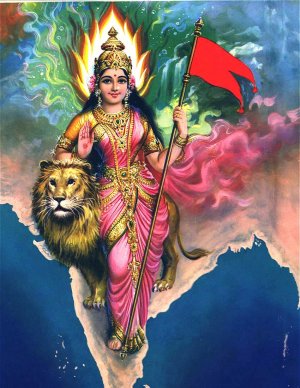
Located in Asia
Area 3,287,590 square kilometres (1,269,346 square miles)
India is located in South Asia, bordered by China, Nepal, and Bhutan on the north, Bangladesh and Burma (Myanmar) on the east, the Bay of Bengal on the southeast, the Palk Strait, the Gulf of Mannar, and the Indian Ocean on the south, and Pakistan and the Arabian Sea on the west. India is the seventh largest country in the world, less than one-fifth the size of Russia.
India has border issues with Bangladesh and China and contests the status of Jammu and Kashmir with Pakistan. India also has water-sharing problems with Bangladesh over the Ganges and with Pakistan over the River Indus.
India can be divided into four main regions: the Himalayas, the northern river-plains region, the Deccan, and the Eastern and Western Ghats.
The Himalayas are a mountain system about 161 kilometres to 322 kilometres (about 100 miles to 200 miles) wide, which extends 2,414 kilometres (about 1,500 miles) along the northern and eastern margins of India. The Himalayas are the highest mountain system in the world. Among the outstanding summits wholly or partly within India is K2, or Mount Godwin Austen (8,611 metres/28,250 feet), which is second in height only to Mount Everest (8,848 metres/29,028 feet) located in neighbouring Nepal.
South and parallel to the Himalayas lies the northern river-plains region, a belt of flat, alluvial lowlands about 280 to 408 kilometres (about 174 to 253 miles) in width. The region comprises the major part of the vast plain area watered by the Indus, Ganges, and Brahmaputra rivers. The plain region of India extends from the border with Pakistan to the border with Bangladesh and continues east into Assam, which is connected with the remainder of the republic by a narrow corridor of land near Darjiling.
The central and western portions of the Indian plains region are watered by the Ganges and its tributaries, which drain the southern slopes of the Himalayas; the region is known consequently as the Gangetic Plain. The Assam region is watered by the Brahmaputra River and its affluents, which rise on the northern slopes of the Himalayas. The Brahmaputra crosses into Bangladesh north of the Khasi Hills. The River Indus rises in Tibet, flows west, and crosses into Pakistan.
South of the plains region lies the Deccan, a vast, triangular tableland occupying most of peninsular India. The Deccan is a generally rocky and uneven plateau divided into natural regions by low mountain ranges and deep valleys. Elevations in the plateau region range from about 305 metres to 1,525 metres (about 1,001 feet to 5,004 feet). The Deccan Plateau is bordered on the east and west by the mountain systems known, respectively, as the Eastern Ghats and the Western Ghats.
The Western Ghats, a bold escarpment overlooking the Arabian Sea, have a general elevation of about 915 metres (about 3,002 feet). Between the Eastern Ghats, which average about 460 metres (about 1,509 feet) in elevation, and the Bay of Bengal is a narrow coastal plain, the Coromandel Coast. In the southern interior, near Bangalore, are the Nilgiri Hills.
Because of the peninsularity, unusual topography, and geographical position of India, climatic conditions are widely diversified on both a seasonal and regional basis. The diversity ranges from tropical to temperate zonal extremes, with the temperature extremes confined largely to the slopes of the Himalayas.
Except in the elevated regions, the remainder of India has a uniformly tropical climate. Seasonal variations resulting from the southwestern and northeastern monsoons profoundly influence such climatic factors as temperature, humidity, and precipitation throughout the subcontinent.
In general, India has two seasons: rainy and dry. The rainy season, which extends from June to November, is the season of the southwestern monsoon, a moisture-laden wind blowing off the Indian Ocean and the Arabian Sea. Beginning early in June on the west coast of the peninsula, the monsoon gradually affects almost the entire country.
During the rainy period, precipitation is extremely heavy, often more than 3,175 millimetres (more than 125 inches), along the slopes of the Western Ghats. In the northeastern section of the country, at Cherrapunji in the Khasi Hills, the yearly rainfall is about 10,920 millimetres (about 430 inches). Mean annual precipitation along the southern slopes of the Himalayas is about 1,525 millimetres (about 60 inches).
Occasionally the winds fail to bring enough rain, causing severe droughts and famine; but the rains breed malaria, and contrasting daytime and night-time temperatures encourage pulmonary disorders. Normally, the power of the summer monsoon diminishes in September.
The cool season of the northeastern monsoon, extending from early in December to February, is usually accompanied by extremely dry weather, although severe storms, attended by slight precipitation on the northern plains and heavy snowfall in the Himalayas, sometimes cross the country. The hot season, beginning about the middle of March and extending until the onset of the southwestern monsoon, reaches its most oppressive stage during May, when temperatures as high as 52°C (126°F) are commonly recorded in central India.
In the vicinity of Calcutta, the mean annual temperature is about 26°C (about 79°F). The mean annual temperature in the west central coastal region of the peninsula is about 28°C (about 82°F). In the vicinity of the city of Madras, temperatures range from about 24° to 33°C (about 75° to 91°F), with an annual mean of about 29°C (about 84°F).
POPULATION
In the far north of the Indian subcontinent, in what is now Pakistan, the Indus Valley civilization endured for almost 1,000 years before it fell into decline around 1750 BC. About 1500 BC, Aryans arrived from the Iranian regions and gradually pushed the native Dravidians to the south. They spoke Sanskrit and their Vedic religion was the foundation of Brahmanism, the early form of Hinduism.
India has the second largest population in the world after China, with 935.7 million people (1995). Of India's ethnically diverse population, Indo-Aryans account for 72 per cent and Dravidians for 25 per cent. The remaining 3 per cent is made up of many other groups.
LANGUAGE
There are at least 300 known languages in India, 24 of which have 1 million or more speakers each. Hindi is the national language. The constitution recognizes another 17 languages, including Bengali, Tamil, Urdu, Punjabi, Telugu, and Sanskrit. At least 30 per cent of the population speaks Hindi. English is important for business and government and is the language of national communication.
RELIGION
Bearing in mind the potential for conflict in such a religiously diverse country, those who framed the constitution made sure that it declared India a secular state. India is the birthplace of the Hindu, Buddhist, Jain, and Sikh religions; it is also the adopted home of most followers of Zoroastrianism, as well as a great many Muslims, Jews, and Christians.
About 80 per cent of the people are Hindu. Hinduism is extremely diverse, polytheistic, and rich in ceremony. Historically, it organized society into four social castes: Brahman (priests), Kshatriya (nobles and warriors), Vaisya (traders and farmers), and Sudra (servants), but these were subdivided into many thousands of other groups, at the bottom of which was a group known as the "untouchables", who were shunned by the rest of society. Some scholars believe that originally a person's caste was not decided by the nature of one's birth but rather on the question of ability. Therefore, a person could move from one caste to another with relative ease. However, the Brahman (considered the highest caste) later manipulated the system so that social caste would be determined by one's birth. Although discrimination on grounds of caste is now illegal, it is still widely practised. In theory the caste system is based on inherited ritual purity, determined by the degree of contact a person's occupation has with the "polluted" issues of birth, death, and the body.
About 14 per cent of the people are Muslim and 2 per cent, mostly in the Punjab, belong to the Sikh religion, which was introduced in the early 16th century. It draws on principles from both Hinduism and Islam and stresses simple teachings and devotion. The Sikh practice of tolerance is reflected in offers of free food and shelter to anyone who comes to a Sikh place of worship.
Buddhism began in India and flourished, but today less than 1 per cent of the population is Buddhist. The Jain religion, too, once had a large following in India, but is now practised by fewer than 1 per cent of Indians. Jains believe in ahimsa-a reverence for life, literally "nonviolence"-and self-denial, and are vegetarians. Less than 3 per cent of the population is Christian.
DRESS
Women in India generally wear a sari, a long piece of lightweight fabric (often beautifully patterned or embroidered) that can be draped in a variety of ways, representing socio-economic status and religious affiliation. They may also wear a colourful type of trouser suit with a long shirt that extends to the knee. Hindu women may wear a bindi, or red dot, on their foreheads. Traditionally, this was a sign of femininity, grace, and marital status, but now it may be no more than one aspect of a woman's makeup, the colour of the bindi frequently matching the wearer's outfit. After marriage, the bindi, accompanied by white powder on the upper forehead (or vermilion powder in the parting of her hair), signifies that the woman's husband is alive; widows do not wear a bindi. In certain ritual and social circumstances women are expected to cover their faces.
Men may wear the traditional dhoti, which is a large piece of cloth wrapped around the waist. Like women's clothing, men's clothing varies according to region and religion. Sikhs wear turbans over their uncut hair and specific items of religious significance, such as a steel bracelet, while Hindus and Muslims may wear a long shirt with trousers, sometimes accompanied by a jacket or a waistcoat.
GREETINGS AND GESTURES
The traditional greeting used in India is performed by pressing the palms together (fingers up) below the chin, and saying Namaste (Namaskaram in the south). To greet superiors or to show respect, a slight bow is added. "Hello" and "Hi" are also acceptable greetings. Out of respect for a woman's privacy, Indian men do not usually shake hands with or touch women in formal or informal gatherings. Indian men will, however, shake hands with Westerners, and educated women may do so as a courtesy. It is polite to use titles such as Shri for a man, Shreemati for a married woman, Kumari for an unmarried woman, or the suffix -ji with a last name to show respect. Muslims use the salaam gesture of greeting, which is performed by raising the right hand toward the forehead, with the index finger pointing to the forehead and the rest of the hand pointing upwards. It is similar to a salute but not as rigid or formal. Indians usually ask permission before taaking leave of others.
Grasping one's ears is an expression of repentance or sincerity. Feet or shoes should not touch another person, and if they do an immediate apology is necessary, because the feet are considered to be polluted. Food is eaten using the right hand. To beckon, the hand is waved, palm down. Pointing is often done with the chin. Whistling is very impolite, and it is considered improper for women to wink. The head should be covered when entering sacred places.
Lifestyle
FAMILY
Indian people are religious and family orientated, and their lives are deeply rooted in tradition. The interests of the family take precedence over an individual's. Families are generally large, but the government is actively encouraging family planning to curb rapid population growth. Extended families often live together or near each other, and form the basic social and economic unit of rural Indian society. The elderly are respected and cared for by their families. The father is considered the head of the household. Middle-class families, especially in urban areas, are becoming more nuclear, and a middle- or upper-class father expects to take care of the children financially until they have finished an education and taken a job-regardless of how long it takes. Most poor and middle-class women work outside the home because of economic necessity, and a growing number of urban women are joining the professional workforce.
Many marriages are still arranged by parents; the degree to which the children are consulted depends on the family. Marriage is sacred to most Indians and is considered to endure beyond death. Chastity is the most treasured virtue of womanhood. Weddings are times of great celebration, expense, and feasting. Ceremonies are often elaborate and vary widely from region to region. In many ceremonies, the bride and groom exchange garlands and promises before they circle around a fire three to seven times to solemnize the marriage. Bright clothing, jewellery, and flowers are part of almost every type of ceremony. The bride's parents may still give a dowry, such as money or land, to the groom, even though the practice is illegal.
SOCIAL LIFE
Visiting friends and relatives at home is a popular activity, and visits between friends or family are often unannounced. The need for prior arrangements is increasing in large cities. At social gatherings, guests are often adorned with a garland of flowers, which they then remove and carry in the hand as an expression of humility. Guests invited for a meal customarily bring sweets, flowers, or fruit for the hosts. Indians often consider it impolite to decline an invitation; if they cannot attend, they are more likely to say, "I will try".
Many Indians do not wear shoes inside the home. Most at least remove their shoes before entering the living room. Hosts offer their guests refreshments such as tea or coffee and fruit or sweets, which it is polite to decline once or twice before eventually accepting. When visitors are ready to leave, they often indicate it by a "Namaste" gesture. In temples, saffron powder, holy water from the Ganges, and sometimes food are offered to visitors as prasad, or blessings from the gods; it is discourteous to refuse these gifts. Women cover their heads when entering sacred places. In traditional society, women are often not involved in social functions.
RECREATION
India has a thriving film industry, which is one of the largest in the world. Every major city has more than 100 modern cinemas. Musicals and romances are most popular. People also enjoy watching television, reading, and debating anything from philosophy to politics. Dance performances and music concerts are popular. Soccer, cricket, and hockey are popular sports. The many religious and folk festivals throughout the year play an important part in the lives of the Indian people.
HOLIDAYS AND CELEBRATIONS
The international New Year (1 January) is recognized in India, though the Hindu New Year occurs in April or May. Republic Day (26 January) celebrates the founding of India as an independent republic, and many parades are held on this day. Independence Day (15 August) celebrates India's independence from Great Britain, although this holiday is not as elaborately celebrated as Republic Day. Labour Day is observed on 1 May, as in Europe. Another official holiday is the birthday of the former leader Mahatma Gandhi on 2 October. On this day people make pilgrimages to the place where this advocate of non-violent protest was cremated. Despite the small percentage of Christians in India, Good Friday (the Friday preceding Easter) and Christmas (25 December) are legal holidays.
In addition to official holidays, there are many festivals throughout the year, celebrating certain deities, the arrival of spring, and other events. Among the most important of these is Vasant Panchami, at the end of January or early February. This is a Hindu festival of spring, at which people wear yellow clothing to symbolize the mustard flower, which announces spring's arrival. Holi, in late February and March, is a lively spring festival at which people smear red and yellow powder on each other and spray each other with coloured water. On this day, in theory, castes are forgotten and all citizens are equal. Baisakhi, in April or May, is the Hindu solar new year. It is celebrated with temple worship, ritual bathing, and fairs featuring music, dancing, and fireworks. Naag Panchami, in July or August, is the Hindu festival honouring snakes, to which offerings of milk or flowers are made. Janmashtami, in August or September, is one of the most important of Hindu festivals and celebrates the birthday of Krishna, who was a hero to both rich and poor.
Diwali, or the Festival of Lights, is celebrated for a week in the first half of November. The festivities involve all manner of lights, such as lamps, fireworks, and bonfires. Gifts are exchanged at this time and people enjoy special foods.
COMMERCE
Urban business hours generally run from 9:30 AM to 1 PM and 2 PM to 5 PM, Monday to Friday; however, many people work far more than a 40-hour week. Government offices open at 10 AM, and business hours in rural areas vary. Bazaars and fairs are popular in India. Rural areas may have a fair every week-some for trading animals, some for selling farm produce and handicrafts, and others as part of a festival.
MUSIC
India has a classical music system that falls into two related but distinct systems, the North Indian Hindustani, and the South Indian Karnatak. Both are based on combining melodic modes called raga with repeating rhythmic cycles known as tala. The music may be vocal or instrumental, a featured solo event, or accompaniment to a variety of classical dance and theatre genres. A classical performer will usually be accompanied by drums and a drone instrument (which creates long, sustained tones).
The Indian population still lives largely in villages, and much of their music is connected with agrarian festivals, and religious and domestic rituals. There is a diversity of music, varying according to region, village, and linguistic, religious, and ethnic affiliation. However, radio, audio cassettes, and even television, are widespread, and have carried standardized Indian film and popular music into every village. The Indian film industry is one of the largest in the world, and the impact of film music, nationally and internationally, has been enormous.
LIBRARIES AND MUSEUMS
India has more than 60,000 libraries, including more than 1,000 specialized libraries attached to various government departments. The National Library in Calcutta is one of three copyright libraries that receive all books and magazines published in India. Outstanding among several hundred public libraries is that in Delhi.
India's more than 460 museums contain important historical and archaeological collections, such as the Government Museum and National Art Gallery in Madras; the National Museum in New Delhi; Sarnath Museum in Varanasi; and the Indian Museum in Calcutta. Baroda, Madras, Kozhikode, and New Delhi have museums containing outstanding collections of medieval and modern art.
GOVERNMENT
The republic of India is a federation divided into 25 states, each with its own elected legislature and appointed governor. The president, who is elected by a college of parliament and the state assemblies, is head of state. The prime minister is head of government. The legislature comprises a 245-member Council of States (Rajya Sabha), which is elected for six years; and a 542-member House of the People (Lok Sabha), which is elected for five years.
THE 20TH CENTURY
India is the world's most populous democracy; free elections have determined leadership since 1947. The tolerance and social harmony necessary to maintain democracy have been weakened by violent clashes between Hindus and Muslims. Many Hindus resent the granting of special rights to the minority Muslims, who in turn resent Hindu domination. A large part of the Muslim majority of Jammu and Kashmir are fighting for independence, while matters are complicated further by another separatist struggle: that of the Sikhs in Punjab. History has shown India to be a volatile country; the accommodation of the cultural and religious diversity of its people presents a constant challenge.
ECONOMY
Although India has one of the world's largest industrialized economies, almost two-thirds of the labour force is employed in agriculture. India is a leading world producer of tea, peanuts, rice, cashews, oil-seeds, tobacco, wheat, cotton, milk, sugarcane, and rubber. Other important crops are cereals, jute, and coffee. Natural resources include coal, iron ore, natural gas, diamonds, crude oil, limestone, and other minerals. The main industries are textiles, food processing, steel, machinery, transport equipment, cement, jute products, mining, and petroleum. In recent years more emphasis has been placed on developing high-tech industries. The biggest export earners are gems and jewellery, engineering products, clothing, chemicals, and textiles.
For most of the time since independence, India has followed socialist economics combined with a philosophy of self-sufficiency. Industry was developed as part of a series of five-year plans, but economic growth was sluggish compared with that enjoyed by countries in Southeast Asia. For the vast majority of Indians the village remains the focus of almost all social and economic activity, although industrialization and economic growth have lent impetus to the process of urbanization.
Courtesy: Microsoft Encarta `97 World Atlas.